Hard water stains are often treated as a cosmetic nuisance, something that looks bad but doesn’t really cause harm. Many homeowners assume a quick wipe-down or occasional deep clean is enough to keep things under control. Unfortunately, that assumption can lead to long-term damage.
A hard water stain is more than just leftover residue. Over time, it can permanently affect the surfaces it touches, especially windows, fixtures, and tile. What starts as faint spotting can turn into etched glass, corroded metal, and deteriorating grout if left untreated.
Let’s take a closer look at how hard water stains develop over time and the real damage they can cause.
Why Hard Water Stains Get Worse with Time
A hard water stain forms when mineral-rich water dries on a surface and leaves behind calcium and magnesium deposits. Each time water contacts that surface and evaporates, another microscopic layer of minerals is added.
Over weeks, months, and years, this buildup:
- Thickens and hardens
- Chemically bonds to the surface
- Becomes more difficult to dissolve or remove
- Begins to alter the surface itself
This gradual process is why older hard water stains are far more destructive than fresh ones.
Damage to Windows Caused by Hard Water Stains
Mineral Etching on Glass
Glass may seem solid and impermeable, but it’s surprisingly vulnerable to mineral damage. When a hard water stain sits on glass for an extended period, minerals begin to etch the surface at a microscopic level.
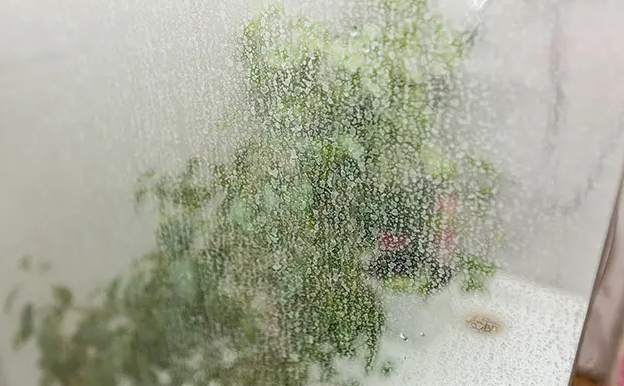
Etching causes:
- Permanent cloudiness
- Distorted reflections
- Reduced clarity and visibility
- A frosted or hazy appearance
Once etching occurs, normal cleaning will not restore the glass. In severe cases, even professional restoration may be limited.
Structural Weakening Over Time
Repeated exposure to hard water stains can weaken glass surfaces by:
- Creating tiny pits that trap more minerals
- Making glass more prone to cracking
- Reducing resistance to temperature changes
This is especially common on exterior windows exposed to sprinkler systems.
How Hard Water Stains Damage Fixtures
Fixtures like faucets, shower heads, handles, and valves are constantly exposed to water. When hard water dries on metal, it doesn’t just leave spots it initiates corrosion.
Corrosion and Finish Breakdown
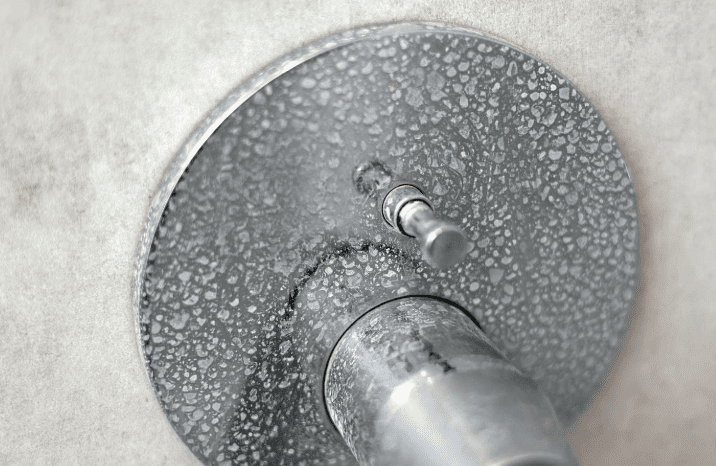
A hard water stain can:
- Eat away at protective coatings
- Cause discoloration and dullness
- Accelerate rust on metal components
- Permanently pit chrome, stainless steel, and brushed nickel finishes
Once the finish is compromised, fixtures become harder to clean and more likely to trap future hard water stains.
Reduced Functionality
Hard water stains don’t only affect appearance. Mineral buildup inside and around fixtures can:
- Restrict water flow
- Cause uneven spray patterns
- Lead to leaks and valve failure
- Shorten the lifespan of fixtures
Replacing fixtures is often far more expensive than addressing hard water stains early.
Tile and Grout Damage from Hard Water Stains
Tile may appear durable, but grout is porous and that’s where the real damage happens.
Grout Degradation
When a hard water stain settles into grout lines, minerals penetrate deep into the pores. Over time, this leads to:
- Discoloration
- Brittleness
- Cracking and crumbling
- Increased mold and mildew growth
Once grout deteriorates, moisture can seep behind tile, leading to structural issues.
Surface Damage to Tile
Hard water stains can also affect tile surfaces by:
- Dulling glossy finishes
- Etching natural stone tiles
- Leaving chalky residue that traps dirt
Natural stone tiles like marble, travertine, and limestone are especially vulnerable because acidic mineral deposits can chemically react with the stone.
Why DIY Cleaning Often Makes the Damage Worse
Many homeowners unknowingly accelerate damage while trying to remove hard water stains themselves.
Common mistakes include:
- Using abrasive scrubbers that scratch surfaces
- Scraping glass with razor blades
- Applying overly acidic or harsh chemicals
- Mixing cleaning products
These actions may remove some buildup temporarily, but they often leave surfaces scratched, weakened, or more susceptible to future hard water stains.
The Long-Term Cost of Ignoring Hard Water Stains
Ignoring a hard water stain can lead to costly consequences, including:
- Permanent glass replacement
- Fixture replacement due to corrosion
- Tile and grout repair or reinstallation
- Reduced home value due to visible damage
What starts as a minor visual issue can quietly turn into a major maintenance expense.
How Professionals Prevent Long-Term Damage
Professional cleaners approach hard water stains with the goal of removal without surface damage.
Their process often includes:
- Identifying whether stains are surface-level or etched
- Using professional-grade mineral dissolvers
- Polishing glass to remove light etching
- Neutralizing chemicals to stop ongoing reactions
- Applying protective coatings to slow future buildup
This approach not only removes existing hard water stains but also protects surfaces from further deterioration.
Preventing Damage Before It Starts
The best way to avoid long-term damage from a hard water stain is prevention.
Effective strategies include:
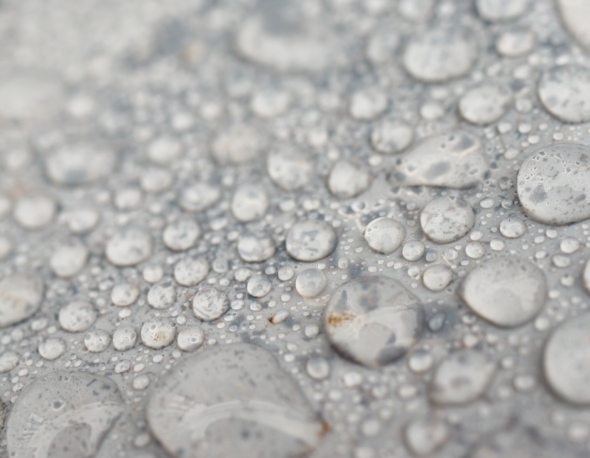
- Installing a water softener
- Drying glass and fixtures after use
- Applying sealants to glass and tile
- Scheduling routine professional cleaning
- Addressing sprinkler overspray on exterior windows
Preventative care significantly extends the life of windows, fixtures, and tile.
Last Swipe
A hard water stain may seem harmless at first, but over time it can permanently damage windows, fixtures, and tile. From etched glass and corroded metal to crumbling grout, the effects of untreated hard water stains are both costly and irreversible.
Understanding the risks and taking action early can save homeowners and property managers thousands in repairs and replacements. Professional cleaning and preventative treatments aren’t just about aesthetics; they’re about protecting your surfaces and your investment.